Development of an app that encourages emotional exchange between parents and their children to develop both emotional intelligence and a closer parent-child relationship.
Role
Research
UX/UI Design
Graphicdesign
Prototyping
Duration
6 days as a team
3 days for revision
Team
Team of 4 UX/UI Designers
Year
2023
PROBLEM
Many parents are not aware of the importance of talking about feelings with their children and the impact these conversations have on the child's emotional intelligence, at the same time they often struggle to understand and categorize their children's feelings and understand underlying triggers.
SOLUTION
An app that encourages frequent parent-child conversations about feelings to help the child develop emotional intelligence by learning to express and communicate feelings, whilst helping parents to better understand their child's emotional world.
Explore the high-fidelity prototype.
you can jump directly to the Highfidelity Prototype by clicking the Button below.

Secondary Research
In our research, we gathered valuable insights into children's emotional world by examining studies on color perception, basic emotions across different age groups, and the significance of early emotional engagement for developing emotional intelligence. We also explored articles on effective communication with children and discussions about emotions. To summarize, we considered the following points to be particularly relevant for our project:
Effective Communication Methodologies:
Guidelines for emotional exchange with children often emphasize the importance of empathy, active listening, and using child-friendly language. Efficient methodologies frequently involve the use of stories, visuals, or playful activities to encourage children to express their emotions.Colors as tools for expressing emotions:
Colors allow for non-verbal communication of emotions. Children often use colors as a creative means to express their emotions. Through painting or drawing, they can process and convey feelings, even when they are not yet able to articulate them verbally.Influence of Early Engagement with Emotions on Emotional Intelligence:
Influence of Early Engagement with Emotions on Emotional Intelligence: Early engagement with emotions significantly impacts emotional intelligence in later adulthood. Early experiences can shape skills such as self-regulation, empathy, and social competence. Children raised in environments that support their emotional needs tend to have higher emotional intelligence in adulthood.Psychological Benefits of Regular Emotional Exchange:
Regular emotional exchange offers psychological benefits such as improved emotional expression, strengthened interpersonal relationships, and better coping with challenges.
A survey amongst parents:
How Confident do you feel in your ability to understand your childs emotions?
47,17 %
Moderately confident
24,53 %
Somewhat confident
11,32 %
Very Confident
9,43 %
Extremely confident
7,55%
Not at all confident
In your opinion, how well do you understand the underlying reasons behind your child’s emotional reactions?
39,62 %
Moderately confident
22,64 %
Somewhat well
20,73 %
Quite well
11,32 %
Very well
5,66%
Not well at all
How comfortble are you in helping your Child cope with challenging emotions such as sadness or anger?
30,19 %
Moderately confident
24,53 %
Quite confident
20,75 %
Somewhat confident
13,21 %
Extremely confident
11,32 %
Not at all confident
How frequently do you talk to your child about their feelings?
47,17 %
Weekly
26,42 %
Bi-weekly
20,75 %
2-3 times a week
5,66 %
Monthly
Persona and User Journey Map
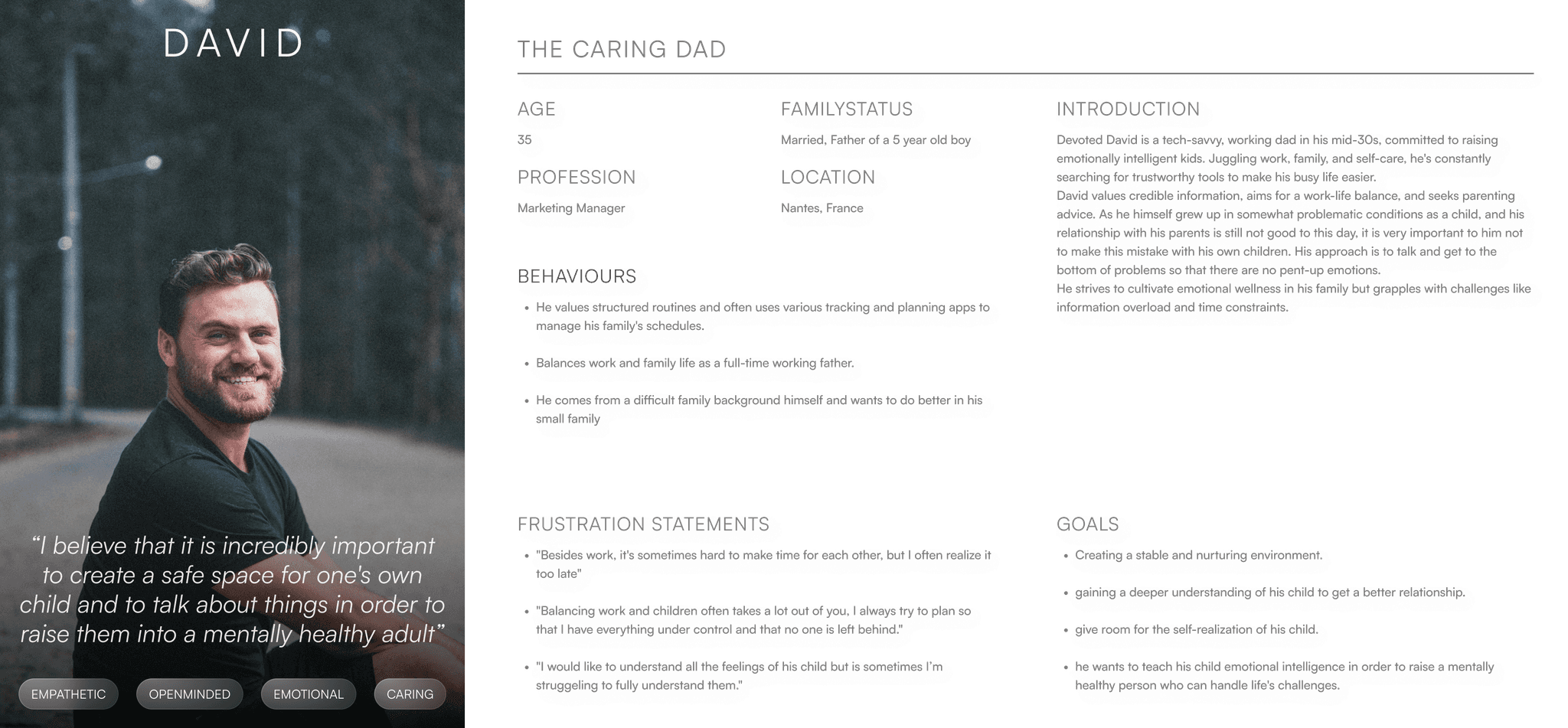
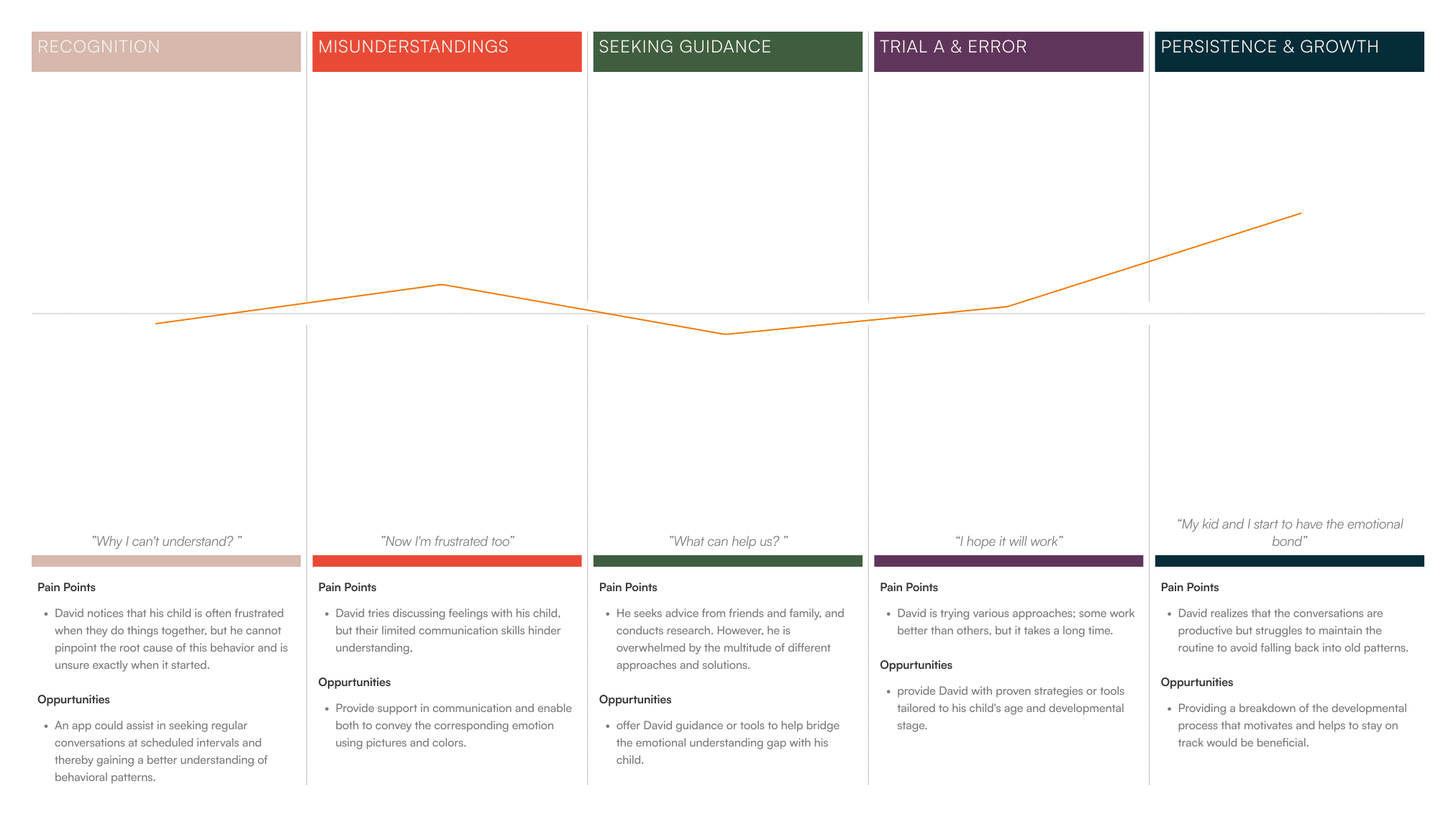
As a representative persona, we created David, a caring father who is committed to better educating his own children due to his difficult childhood. His biggest challenge is to find a balance between parenthood and career and ensure that his child receives adequate attention amidst the challenges of daily life. As a devoted and committed father, he strives to understand his child's feelings, but often encounters communication barriers or a lack of routine when talking about feelings and emotions.
Problem statement:
Based on the insights gathered from our survey, we formulated a problem statement that succinctly captures the underlying issue and serves as the foundation for our design and development process.
Caring parents need to find a way to better understand their children’s feelings and educate them about their emotions to foster their emotional intelligence, because children often struggle to express and communicate their feelings accurately.
The ideation process:
In the ideation phase, we worked with the crazy eight method to develop a wide range of different solutions. We then carried out a dot voting to evaluate the ideas generated. This allowed us to identify promising concepts that resonated most with our team. In a second iteration, we expanded on these selected ideas to further develop and refine their potential solutions.
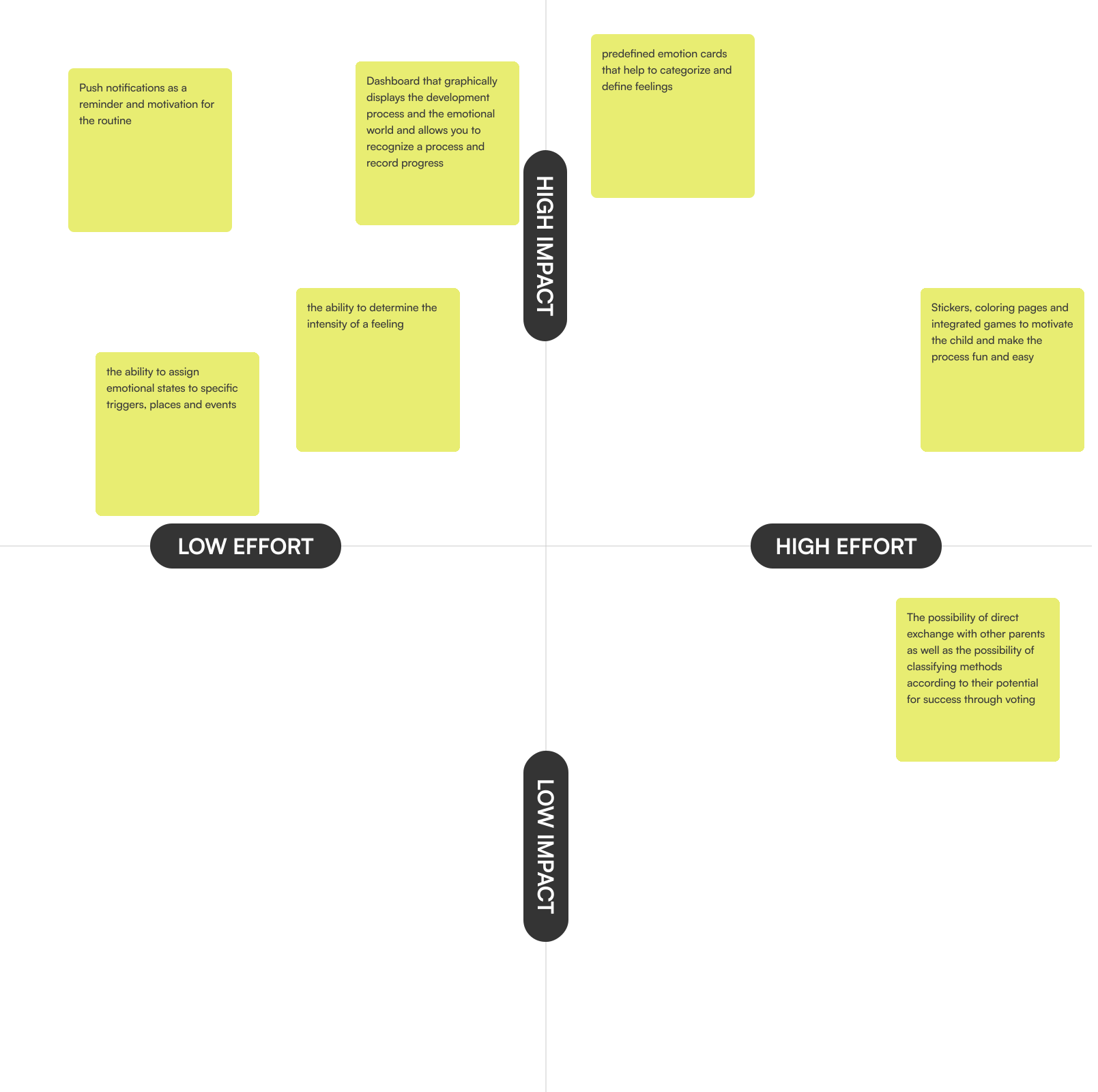
With the help of an impact/effort matrix, we categorized ideas according to their added value in relation to the development effort. This enabled us to define which approaches were feasible for us within the time frame.
Defineing the Goal:
The aim is to develop an app collaboratively used by parents and children. The primary goal of the app is to establish a routine for parent-child communication, providing the child with an opportunity to discuss their emotions and thereby enhance their emotional intelligence. Through visual representations and written definitions of several "basic emotions" and the ability to define their intensity, the app supports the child in a playful manner. For parents, the benefit lies in gaining assistance in understanding their child's emotional world and recognizing underlying triggers for specific emotions or emotional patterns. Additionally, the product aims to enable a statistical analysis of collected information to visualize progress.
The MVP Userflow
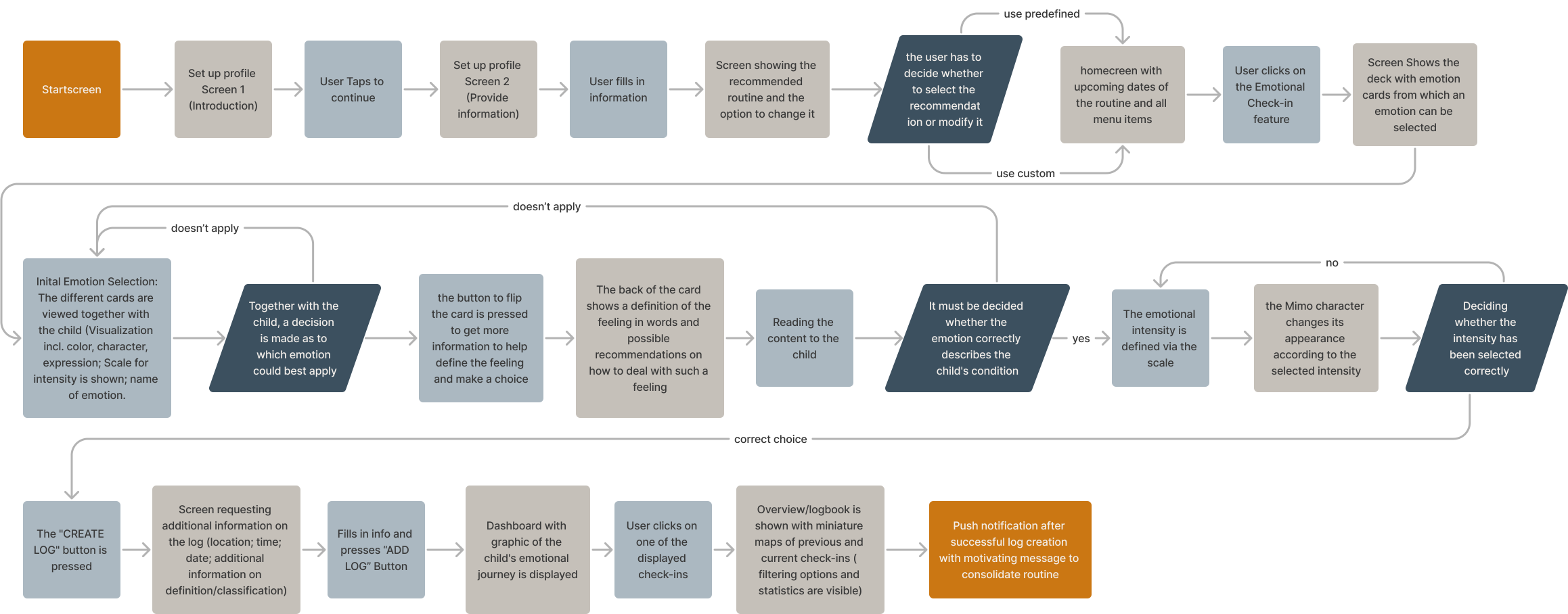
Using a userflow chart, we mapped out the individual steps of the process, starting from the initial guided profile creation, including input of all relevant data, extending to the exploration of the emotional deck, including determining the intensity of emotions, and ultimately providing insight into the data analysis of the process.
Screen Development
Based on the user flow, we had determined in the previous step which screens we had to show for our process and which information was particularly relevant for our process. We began sketching the screens by hand in order to generate the widest possible range of variants in the shortest possible time, from which we could then make a selection for further iteration rounds and digital wireframes.
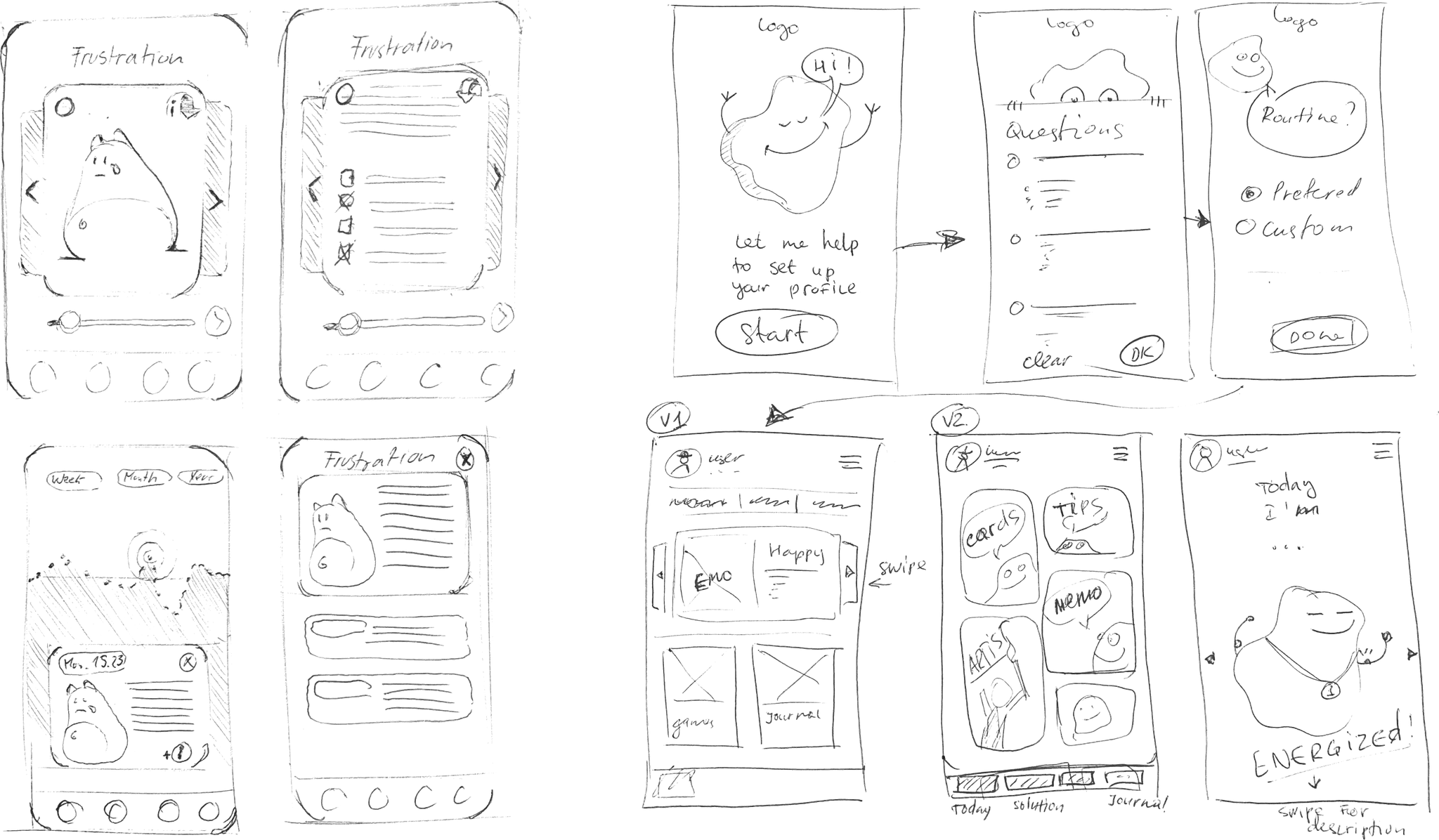
The first hand-drawn low-fidelity wireframes
The challenge here was to make the app appealing to both parents and children. During the idea phase, the idea arose that a small, abstract character should support the children in identifying and defining their feelings and thereby add a playful component to the emotional check-in process. The sketches allowed us to quickly run through various ideas and slowly advance the character design of the app.
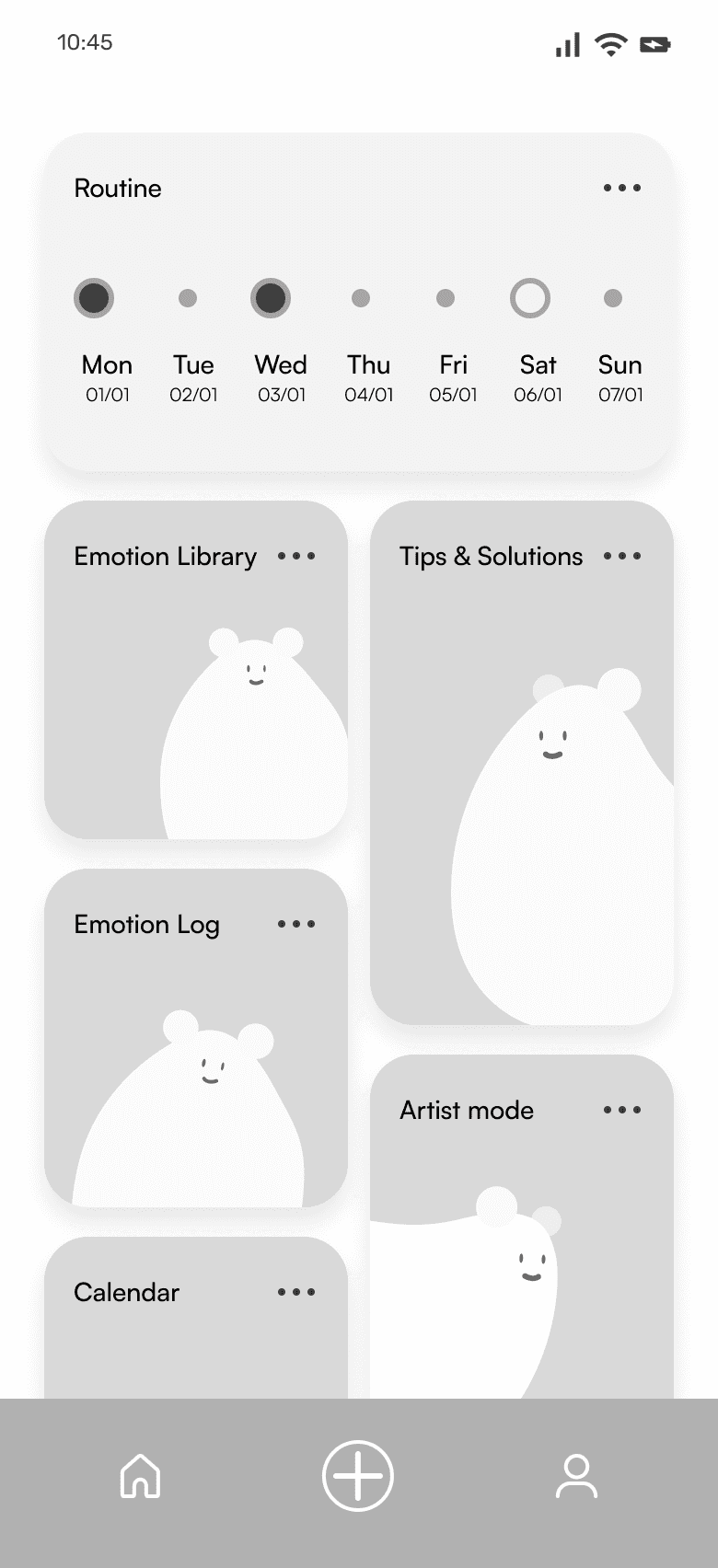
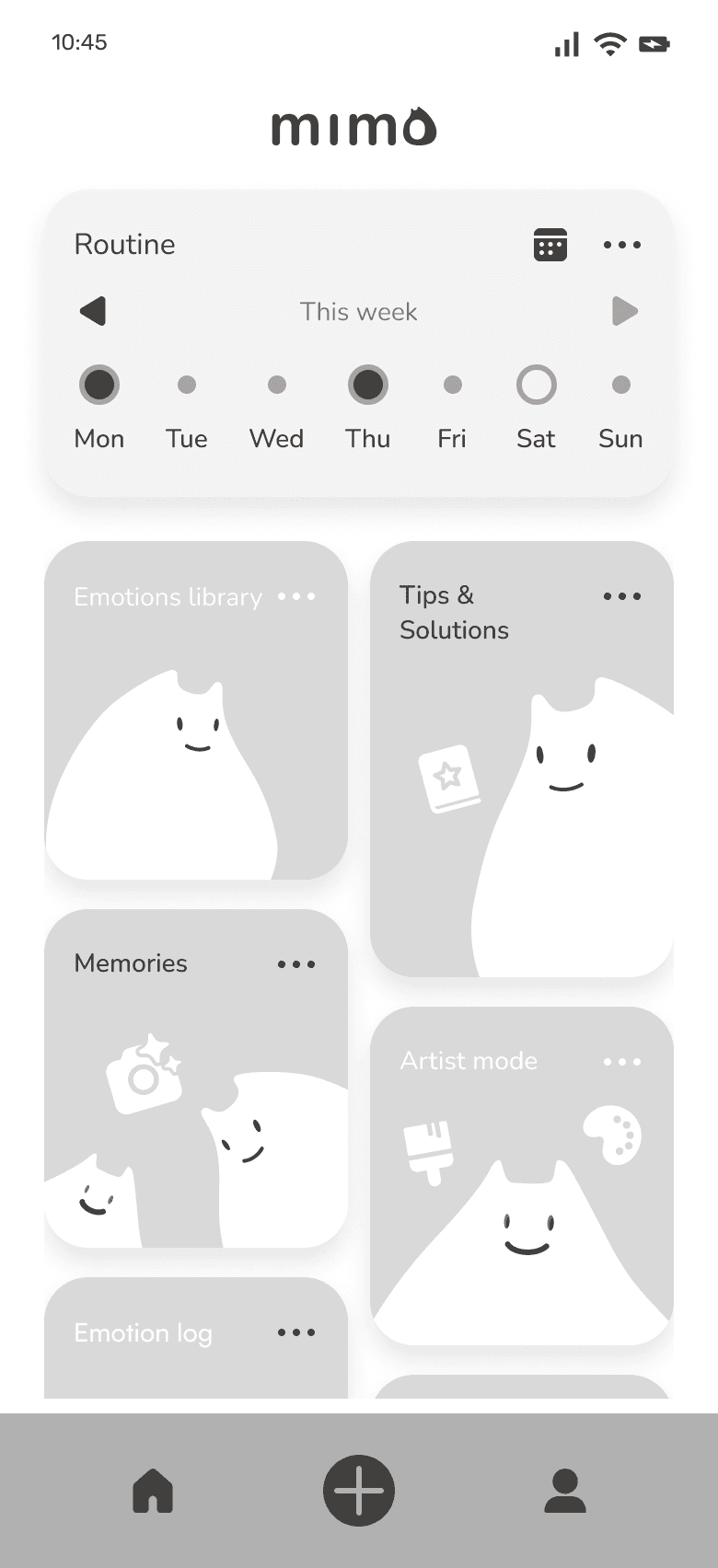
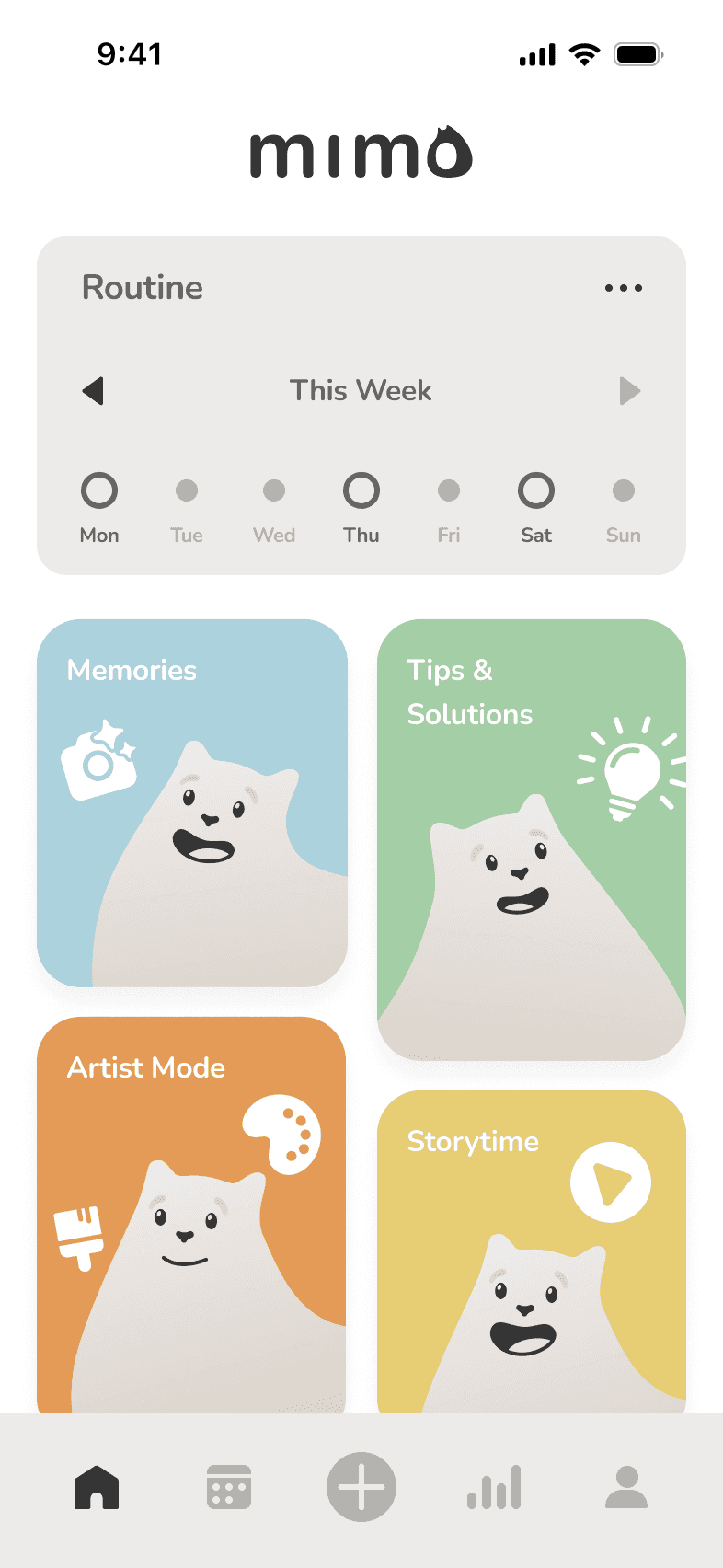
Homescreen Development
The home screen gives an overview of upcoming appointments for emotional check-ins and provides an overview of the different sections of the app in the form of small, differently colored tiles, with illustrations explaining the section. During the development process, the main features of the app (including the creation of emotional logs and the dashboard) moved to the navbar to provide quicker access to these features. Access to the calendar is now also controlled via the navbar, where users can customize their appointments or view past check-ins.
Log-screen Development
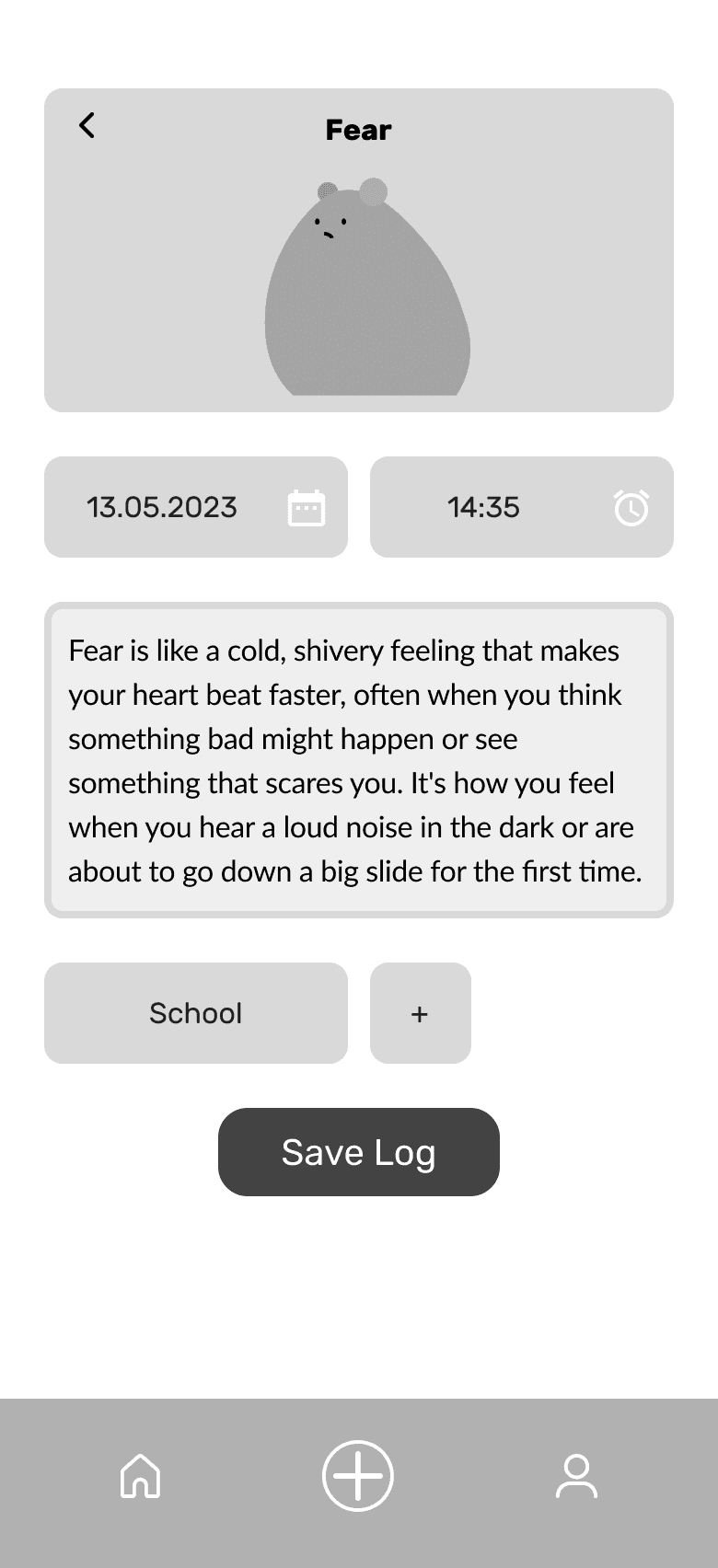
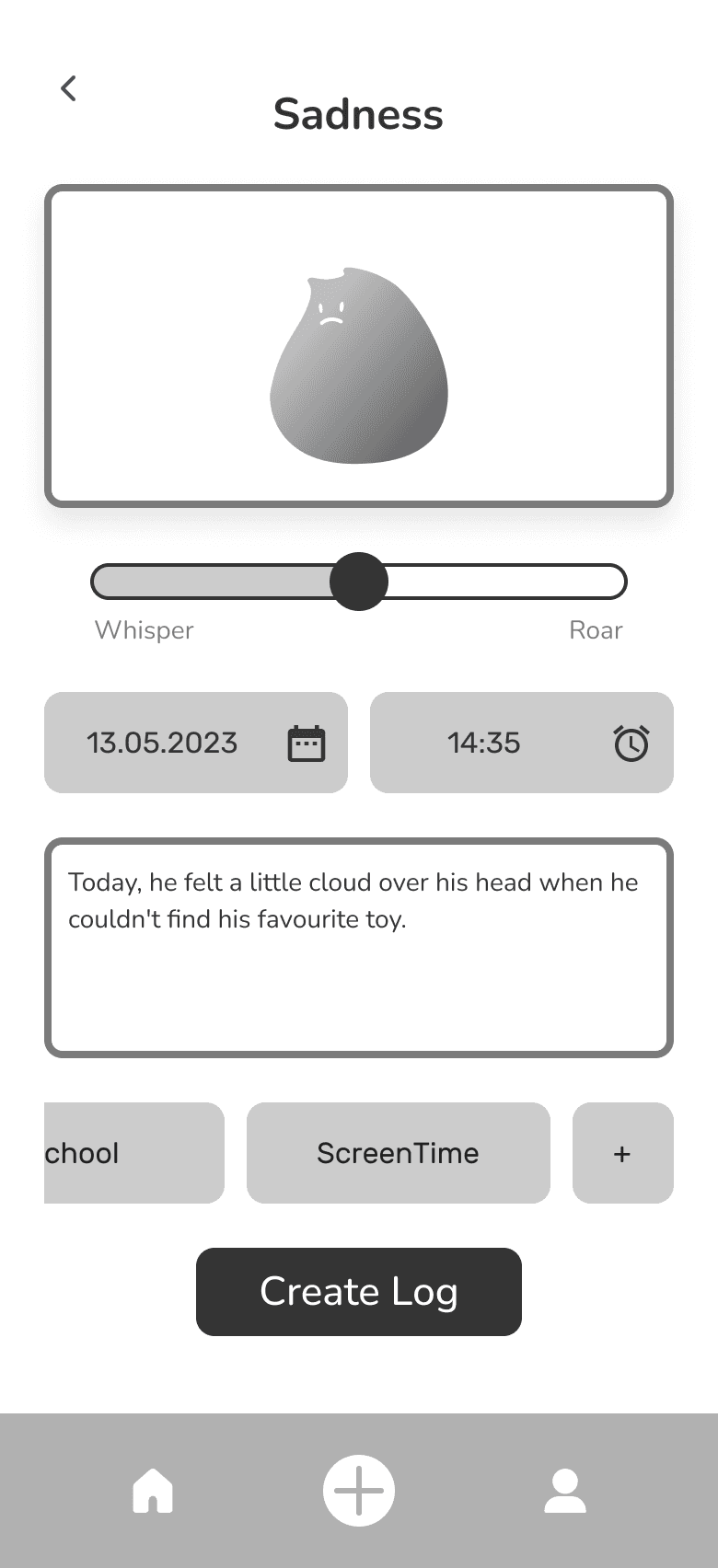
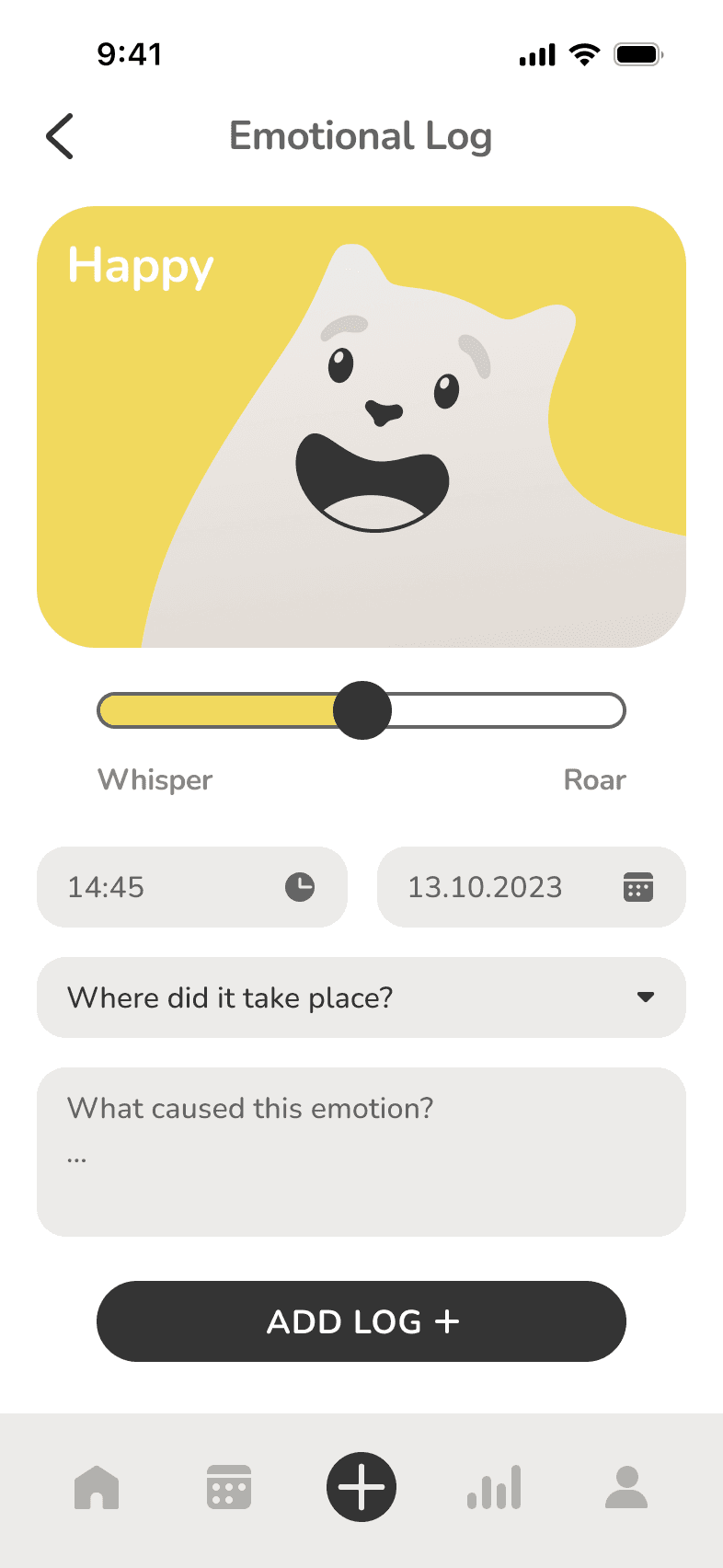
The Emotional Log Screen, which is accessed after defining the emotion and its intensity and deciding to create a Log, initially did not have the slider allowing for a re-adjustment or subsequent adjustment of intensity. However, during an iteration round, this slider was added. Additionally, the indicator was kept in the color of the respective emotion card to establish a clear correlation. Originally affecting Mimo's size, in the final version, the slider controls Mimo's facial expressions. This adjustment was crucial due to the unclear connection between size and emotion intensity. Predefined or new locations can be selected through a dropdown menu.
THE HIGH-FIDELITY PROTOTYPE
The result of our process was the final high-fidelity prototype of the Cultura App. The animations listed below guide through the individual screens included in our prototype.
The personalized registration process
During the sign-up process, the user is accompanied by Mimo, the name-giving character of our app. He guides the user through the individual steps to be completed and gives hints and tips. It was crucial for us to establish a more personal approach in order to encourage the necessary openness and open-mindedness on the part of the user.
Definition of the emotional state
Using the Emotionsl deck, a collection of "basic emotions" in the form of playing cards on which each emotion/feeling has been given its own color and a corresponding facial expression of the Mimo character, parents and child can go through the cards together to pick out the most appropriate one. In addition, some tips are noted that help to manifest positive emotions or help to overcome the fear of bad feelings.
Creating an emotional log
After the emotion has been identified, a log can be created by pressing the Create Log button. Here you can enter written annotations about the dialogue and the triggers of the emotion as well as the time and place. In the next step, the log is saved and can be reviewed in the graphical analysis in future, so that the development can be traced at any time and potential patterns can be identified.
Outlook for future development
The app offers numerous opportunities for future expansion, some of which already came up during our development process and were teasered by us as menu sections in the main menu. Emotional check-ins are particularly require developing a routine, so playful extensions that encourage the child to use the app could be a valuable addition. The app could also include games, music and audio books that deal with the topic and help the child to learn about the subject matter and understand the connections in order to be able to help themselves more quickly in emotional check-ins. There could also be a tips and solutions section that functions as a kind of forum where parents can share best practices, successes and failures.